How to Write a Freelance Proposal That Actually Gets Signed
On this page
Why most freelance proposals get ignoredThe structure that gets proposals signedWriting in a tone clients actually trustCommon mistakes that kill a good proposalA simple pre-send checklistKnowing how to write a freelance proposal that actually gets signed is less about clever writing and more about removing every reason a client has to hesitate. Most proposals fail long before the price line — they fail because the client can't tell what they're agreeing to.
Why most freelance proposals get ignored
A proposal that goes unanswered usually has one of three problems: it's too long for the client to parse quickly, it doesn't match anything discussed on the call, or it buries the price so deep the client gives up before reaching it. None of these are writing problems — they're structure problems.
The structure that gets proposals signed
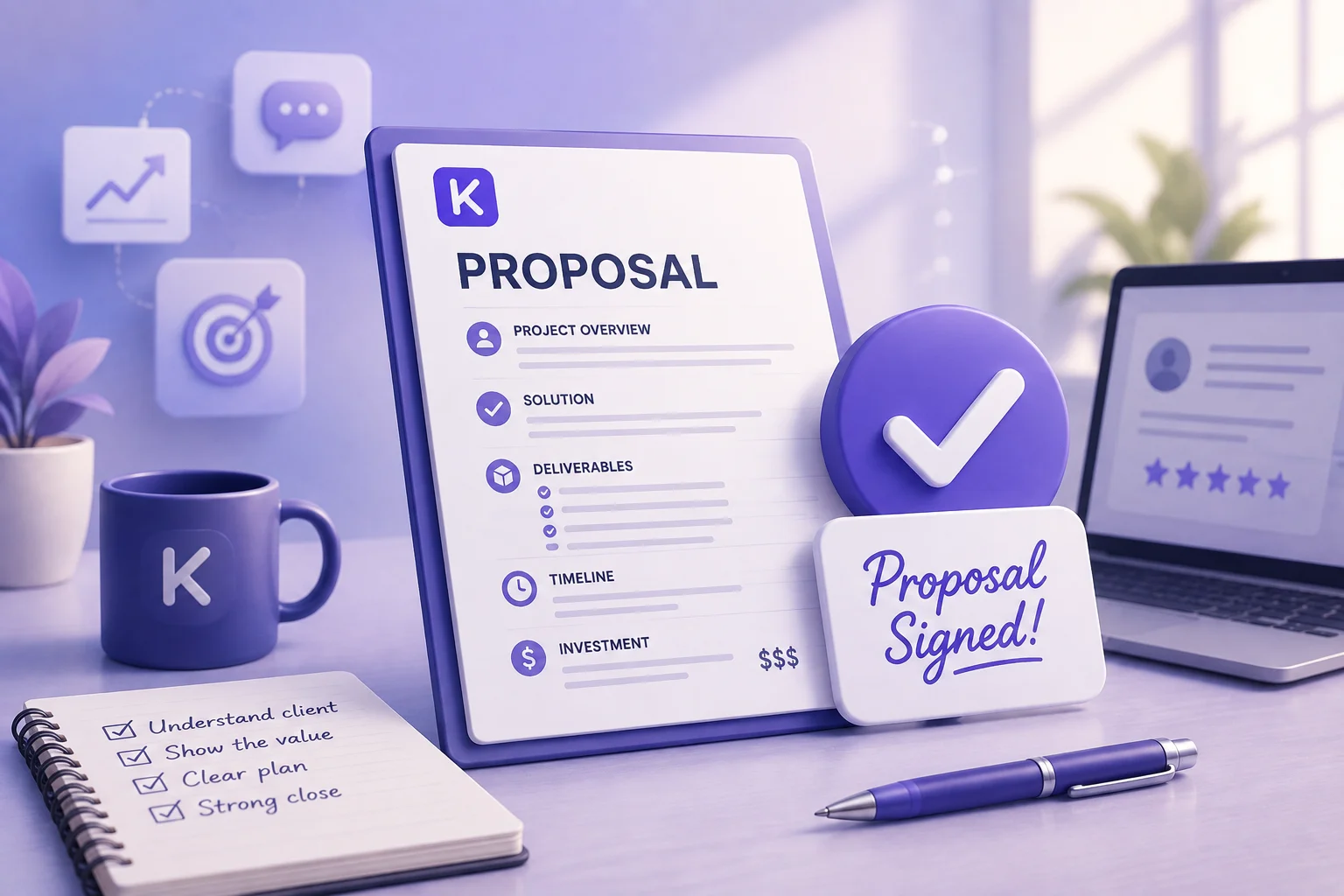
A proposal a client can say yes to in one read has four parts, in this order: a one-line summary of the problem you're solving, the scope of what you'll deliver, the timeline, and the price. Every section after the summary should answer a question the client hasn't had to ask yet.
Scope, timeline, and price — in that order
Put pricing after scope and timeline, never before. A number without context reads as arbitrary; a number that follows a clear list of deliverables reads as justified. Break the price into what it covers rather than a single lump sum where possible — clients trust a number they can trace back to something specific.
Writing in a tone clients actually trust
Match the language your client used on the call or in their brief. If they described the problem casually, a stiff, over-formal proposal will feel like it came from someone else. The goal isn't to sound impressive — it's to sound like the same person they already agreed made sense to work with.
Proposal Agent drafts this exact structure from your project brief, in your voice, automatically.
See how Proposal Agent works →Common mistakes that kill a good proposal
The most common one is scope that doesn't match what was actually discussed — clients notice immediately, and it signals you weren't listening. The second is leaving out what happens if the scope changes mid-project, which leads directly to the disputes that make freelancing painful. The third is no clear next step: a proposal should end with exactly one action for the client to take.
A simple pre-send checklist
Before sending, confirm the scope matches the call, the price is broken down rather than a single number, the timeline has real dates rather than "a few weeks," and the document ends with a single clear call to action — sign, reply, or book a call. If all four are true, you've already removed most of the reasons a client stalls.
Try it on your own business
14-day free trial. No credit card required.