Agentic AI vs. Automation: What's Actually Different
On this page
What rules-based automation actually doesWhat an agentic system does insteadWhere human-in-loop still fitsWhich one you actually needEvery few years, a new wave of "automation" tools promises to take admin off your plate. Most of them are digital forms with a workflow attached. Agentic AI is a different category entirely — and the difference matters for how much of your business you can actually hand off.
What rules-based automation actually does
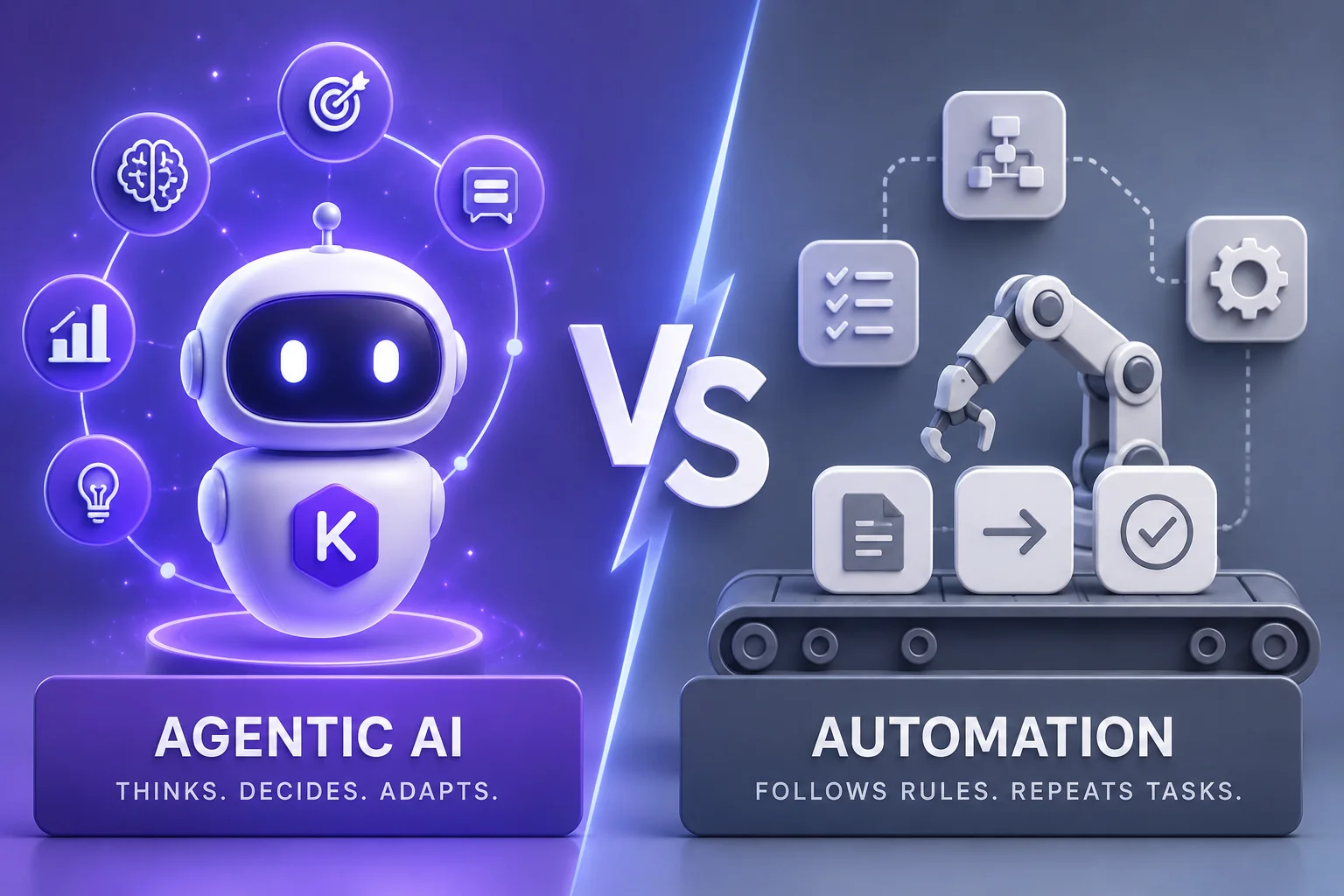
A rules-based tool runs a fixed sequence: trigger, condition, action. "When a form is submitted, send this email." It's reliable for repetitive, well-defined steps — but it can't adapt to a client who phrases things differently, negotiates a deadline, or asks a question outside the script. Every new scenario means manually building a new rule.
What an agentic system does instead
An agent reads context, reasons about what should happen next, and drafts an action — a reply, a proposal, an invoice — based on judgment, not a fixed script. It doesn't need a rule for every possible client message; it needs the same information a human assistant would use to make a call.
Shared memory changes the math
Because agents share memory, a detail captured once — a client's name, a project scope, a rate — is available to every later step. That's the difference between "automation" that still requires you to re-enter data at every stage, and a system that actually remembers your business.
See exactly how this plays out across the freelance lifecycle.
See how Kelavo automates this →Where human-in-loop still fits
None of this means agents should act unsupervised. The most useful version of agentic AI drafts the action and waits for a person to approve it — you keep final judgment on anything that reaches a client, while the agent does the thinking and drafting that used to take up your morning.
Which one you actually need
If your business runs on a handful of predictable, unchanging steps, rules-based automation is enough. If you're juggling leads, proposals, projects, and invoices that all look a little different every time, an agentic system adapts where a rule engine breaks down.
Try it on your own business
14-day free trial. No credit card required.