Freelance Invoicing 101: Getting Paid on Time, Every Time
On this page
Why freelancers get paid lateWhat every freelance invoice needsA follow-up schedule that doesn't feel awkwardHandling late payments without burning the relationshipLate payments are the single most common freelance invoicing complaint — and most of the time, the invoice itself is part of the problem. A few small, consistent habits fix most of it before a payment is ever late.
Why freelancers get paid late
Late payment usually isn't malicious — it's friction. An invoice sits in an inbox because it's unclear what it's for, has no due date, or requires the client to dig up a payment method instead of clicking a link. Every extra step between "received the invoice" and "paid it" adds days to your payment cycle.
What every freelance invoice needs
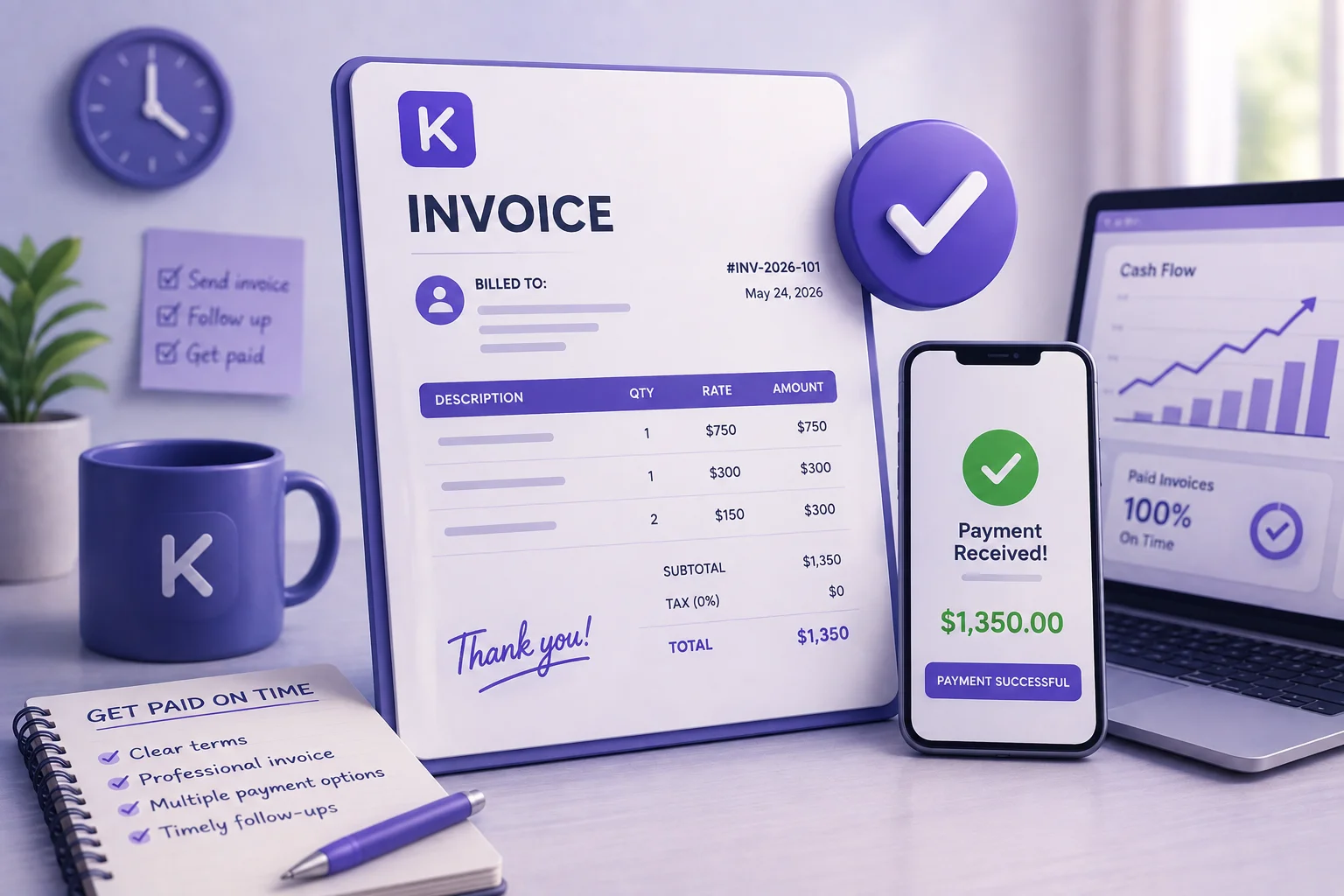
A clean invoice states the project or milestone it covers, an itemized breakdown rather than a single total, a specific due date rather than "net 30" with no anchor, and a direct way to pay — a link, not a request for bank details over email. The clearer the invoice, the less back-and-forth it generates.
A follow-up schedule that doesn't feel awkward
Set the schedule before you need it, so a follow-up never feels like a confrontation in the moment: a friendly reminder a few days before the due date, a neutral check-in the day it's due, and a direct but polite follow-up about a week past due. Sending the same message every time, on a schedule, takes the emotional weight out of chasing payment — it's just what happens next, not a judgment call you have to make each time.
Finance Agent generates a clean, itemized invoice from your project details in seconds — download the PDF and send it to your client your way.
See how Finance Agent works →Handling late payments without burning the relationship
When a payment is genuinely late, lead with a question rather than an accusation — "just checking this didn't get lost" does more work than a terse demand. If it happens repeatedly with the same client, that's a signal to revisit your terms for them specifically: a deposit up front, shorter payment windows, or milestone-based invoicing instead of one lump sum at the end.
Try it on your own business
14-day free trial. No credit card required.